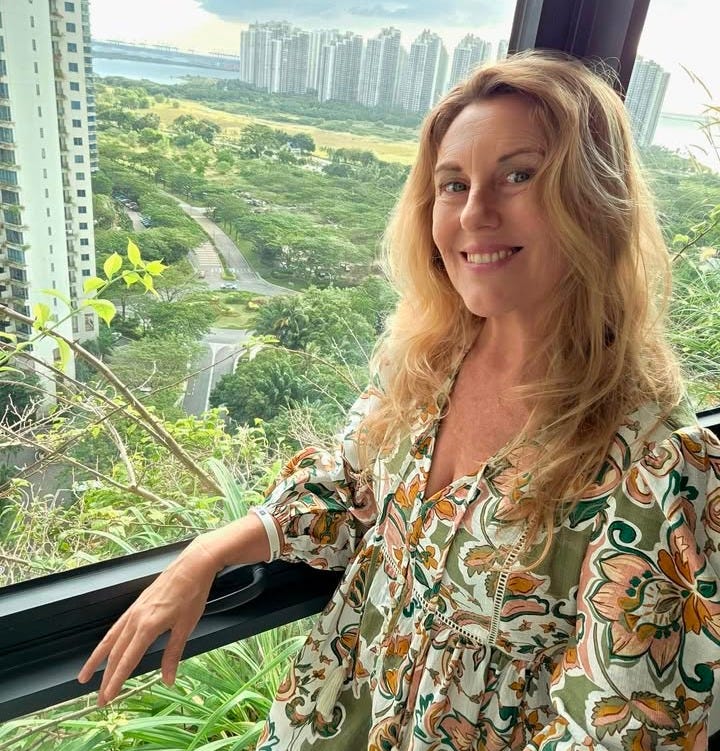
How much tax will people tolerate in a society that no longer meets their needs, or is simply too expensive to live and reach one’s potential in?
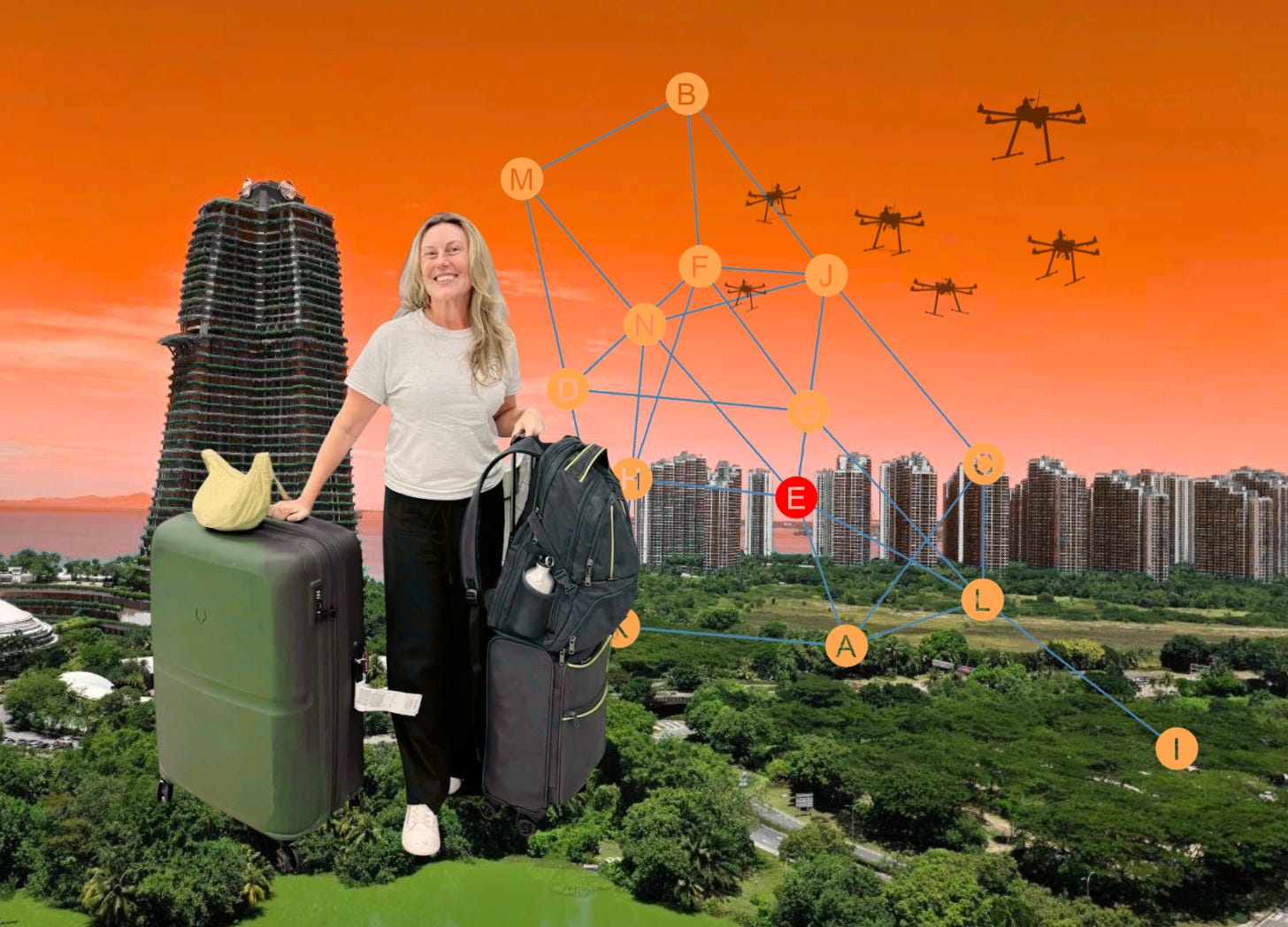
Balaji Srinivasan, founder of Network School, wrote of Parag Khanna’s work: “Millions of people will soon vote with their feet to reveal the most desirable locales of the 21st century. They’ll abandon failing models and, with a new flexibility created by technology, bring their skills to places that reward ingenuity.”
The migration is underway and there’s a tax problem nobody knows how to solve
Many Westerners experience digital nomad life, but now network state inspired startup societies and popups are giving them longer term ideas - they can stay a month, a year, or longer in one offshore community, in a developing country where the cost of living is lower, they can work remotely, learn new skills and have fun, while building new businesses with emerging technologies and access to capital.
A startup society lets a digital nomad stop being a tourist and opt into a new life, and the number doing it is growing.
Nomads are rarely concerned with the tax systems of countries they’re passing through. Settling in one place can change your tax residency - which works differently to immigration status - and poor planning or non-compliance can be very costly and limit your visa.
Personal tax relocation planning is not offered in most accounting firms, and cross-border individual tax is genuinely complex - more so when someone is moving and earning across multiple jurisdictions and platforms, pooling resources in community structures, and participating in crypto-economies that the designers of existing bilateral tax treaties did not contemplate.
So many are either ignoring it, navigating it by themselves, guessing with AI, or being marketed to by non-professional providers that may contract in CPAs for advice and legitimacy. Without licensed representation and protections against tax authorities, or a carefully tailored plan, the freedom they came for can unravel.
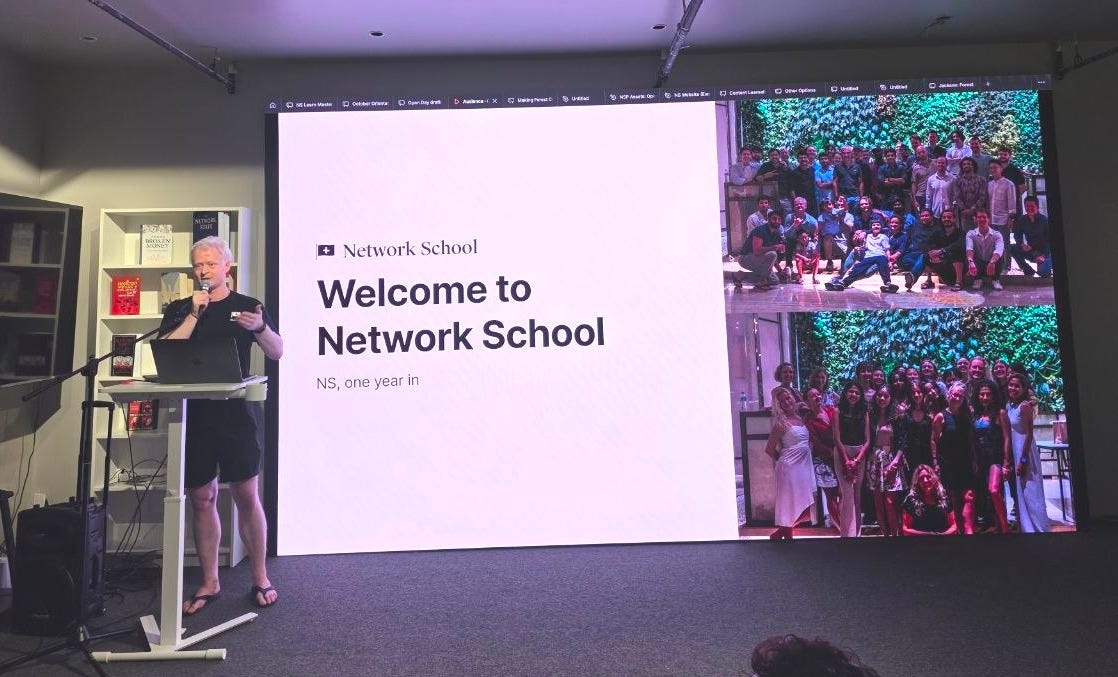
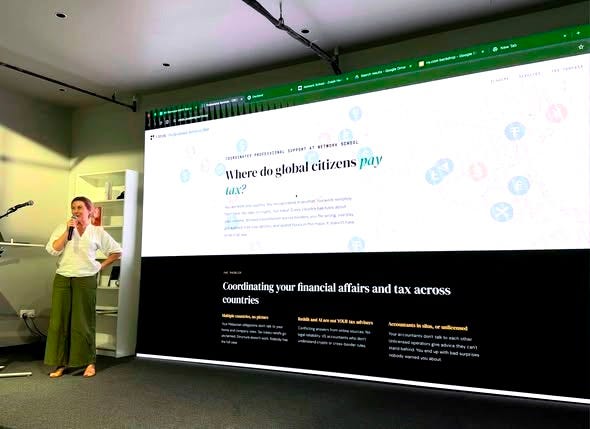
The problem I am working on at Network School
That is the problem I am working on at Network School. But not by building a proprietary tech platform or service that recruits professionals to make it work. We need qualified accountants as technologists building the infrastructure the profession itself should own to serve this new type of migrant.
I have been with Network School since the founding cohort in September 2024, one of 128 selected from thousands of applications.
I am here because I believe network states are the future, and my own global networks and experience can bring the dark talent into the accounting profession.
The practitioners we need are those who understand or want to learn Bitcoin, cross-border tax, entrepreneurship and free markets. Accountants are hard coded to build with systemic integrity - if they build the systems they can confidently take risks to stand up for people the existing system wasn't designed for.
We need practitioners like me guiding people through a tax journey that existing frameworks have no clear map for, toward recognition of a new kind of state that's not defined by contiguous land, but by a distributed, digital-first population.
Setting a new global competencies framework that bridges tech backgrounds to recognised accounting credentials.
That is what I came here to do, not to run a service that attempts to commoditise international tax services with fixed-price package solutions.
The gap I see in the network state framework
The network state framework, as Balaji Srinivasan defines it here, is crypto-native with network state infrastructure on a blockchain for citizen records, real estate, and key management. What it does not address is who can make it recognised by the jurisdictions that give its members passports. There appears to be plan (yet) for tax or engagement with aligned professionals who speak the language, which is the gap.
The concept of geodesic not geographic distance shows why. Existing tax systems assume that where a person physically is determines their economic relationships. The residence tests, source rules, and permanent establishment thresholds assume a geographical base. Geodesic distance doesn’t come into it. People in these cloud communities are economically and socially present across multiple jurisdictions simultaneously, organised by their network proximity rather than by where they sleep.
That tax gap is now a pressing reality for the people living inside these communities, not a problem to deal with down the track.
Failing to address this now is how network societies stay permanent tourist camps instead of becoming states.
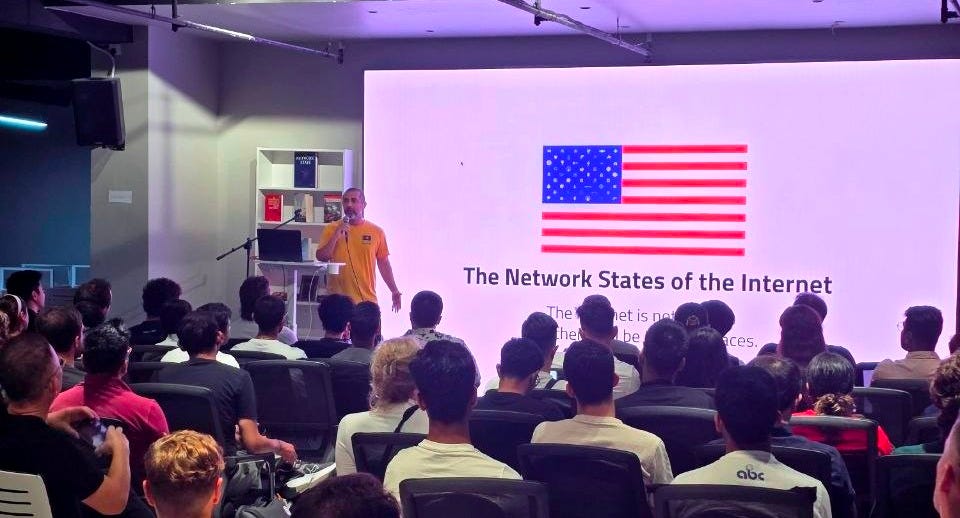
The compliance concern
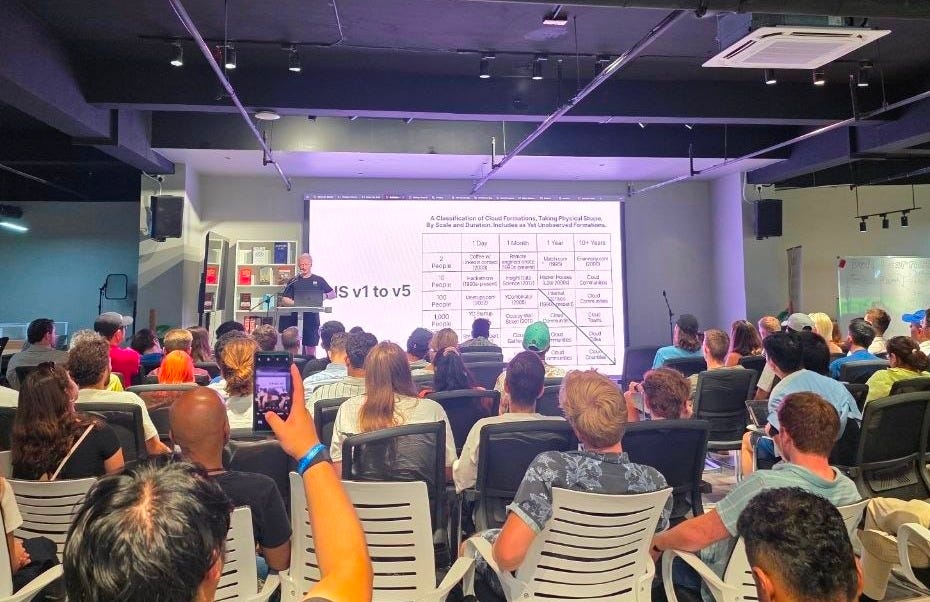
Network societies are in the early stages, at V1 and early V2, today. Members are fully exposed to ordinary domestic tax laws in their host and home jurisdictions. The economic behaviours that develop in network societies - income earned across multiple jurisdictions, contributions to society-as-a-service, participation in crypto-native and tokenised economies - sit awkwardly with tax codes and bilateral treaties designed for a different era.
There is genuine uncertainty about how current laws and tax authority interpretations (ruling etc) apply, and compliance risks are giving people significant anxiety. When worked through, the tax rules outcomes are often inequitable given the facts of how these people actually live and work.
This is why credentialed public accountants with diverse cross-border expertise and peer-training need to be present in these communities now, representing people against interpretations of domestic laws while programming the systems that can demonstrate collective good faith.
Getting that good faith on record now is what later negotiations for diplomatic recognition and carve-out tax treatment, amnesties etc, will depend on.
Where this leads
In 2012, writing an international tax masters paper, I proposed a tax system for global citizens: report and contribute once to a global body, distributing funds to countries based on each person’s physical footprint during the period.
The idea was to end separate filing in each jurisdiction, to remove atomised compliance across multiple systems for one life lived across borders. That was before I studied blockchain and read The Network State and knew what I needed to build. Living in Balaji’s experiment has exposed the tax frictions of people aggregating across borders at scale, so I’m revisiting that work.
The endpoint I am working toward is the recognition of a non-geographic resident class whose tax affairs, for defined income categories, are mediated collectively through the network-society entity by status agreement with host jurisdictions. That agreement does not require new international law. It can take the form of a domestic administrative arrangement, a reporting safe harbour with transitional relief, or a delegated withholding framework negotiated with a willing host sovereign.
I first publicly shared this argument in September 2025, ahead of the Network State Conference: LinkedIn
The tax development path looks like this:
V1 Members file their own taxes individually in each country they live in
V2 Patterns emerge across the community - similar situations, similar obligations - and practitioners start coordinating responses
V3 The community builds its own professional and institutional layer - credentialed practitioners, compliance systems, shared records
V4 The community’s economic weight becomes visible to host governments and negotiation for preferential treatment begins
V5 The network society negotiates collectively with host jurisdictions - not through a single institution but through a credentialed professional network representing members, individually and collectively
Beyond V5 Network residency becomes a recognised legal status - a new tax base and class of taxpayer that existing tax systems are incentivised to attract
Network societies like Network School are at V1 and early V2 stages now. The work of moving to later stages is the present task, and it should involve profession-led innovation from the start - not retrofitted later when the frameworks have already been set by others.
Why this cannot be left to non-professionals
I’ve been observing people inside the network state movement trying to solve the tax problem without calling directly on the expertise it requires. That is understandable - they're confronted by compliance fears and want to do something to be in control (enough people are afraid of tax to pay for a half baked solution on a stick).
But no one is asking whether qualified people within their geodesic proximity are already working on it, and whether a practitioner-led solution would serve members better than a platform built by non-practitioners that contracts CPAs in for legitimacy.
That model puts the CPA professional in a supporting role inside someone else’s product. It does not give network society members the licensed representation and structural protections they should be able to rely on. Nor does it give the profession the early standing it needs to negotiate on their behalf at V4 and V5.
A network society that reaches the point of negotiating carve-out tax treatment with host sovereigns needs a constituent capable of representing each of its individual members individually and collectively, with the same rigour that any other organised economic actor brings to fiscal negotiation.
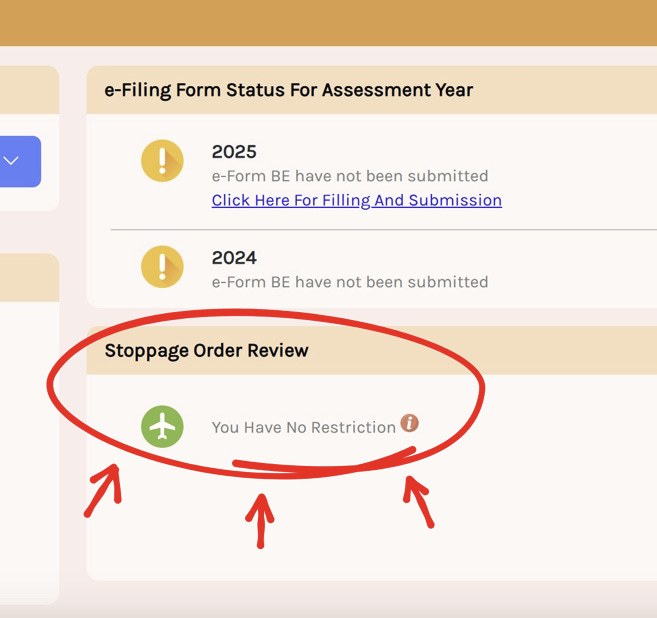
Any tax solution that can land people in jail needs to have experienced professionals leading it from the start. Tax authorities recognise licensed tax practitioners who are members of self-regulated accounting bodies and are more likely to trust their software outputs. Even if you’re audited, having your own adviser defend a reasoned position means the difference between forgiveness or penalty and a prosecution. Roger Ver didn't listen to his tax adviser.
A community membership model, not a procurement model
Professionals contracted downstream for technical support have no stake in the community they are representing.
You cannot procure advocacy.
A practitioner who lives inside the network society, who has gone through the same tax residency complications as every other member, who has skin in the same compliance risks and the same long-term outcome. That person advocates from lived experience and genuine interest.
They are a member first and a professional second. That is what makes their representation credible to both the community and eventually to the host jurisdictions the community needs to negotiate with as it gains economic leverage.
The professional input issue is being treated as a product problem: Build a proprietary platform, contract some CPAs, solve the compliance issue and tell everyone to use it.
That just treats professionals as vendors, not as members. Vendors leave when the contract ends. They don’t show up at V4 because they were never part of V1 through V3.
The monetary architecture underneath
A collective fiscal counterparty negotiating with host nations on behalf of its members needs a unit of account that no sovereign controls. Without that, the network society is negotiating its members’ tax affairs in the currency of the jurisdiction it is trying to gain independence from. It is paying its collective obligations in dollars, ringgit, or euros - denominated, measured, and ultimately controlled by the very system it is trying to operate outside of.
A privately governed institution that derives its fiscal authority from the host sovereign is not an alternative to that sovereign. It is a licensee of it.
Proposals emerging in the network state space address this by making a network bank the host sovereign’s consolidated tax collection agent. A single institutional interface would handle compliance and remittance on behalf of all members, in the host currency, under the host framework. This may be administratively more efficient than individual filing, but it compromises fiscal independence. Either way, efficiency can be engineered with smart contracts and AI.
The question is whether the network bank’s intermediation between members and sovereign tax systems serves the sovereign’s existing framework or builds toward the network’s eventual independence from it.
Bitcoin is the unit of account this model depends on at advanced stages. Every balance sheet, every contribution agreement, every fiscal negotiation needs to carry a Bitcoin-denominated reference value alongside its nominal currency value.
Operational currencies can function across different chains and protocols. What determines how much human oversight any given monetary function requires is how far it sits from Bitcoin settlement. The further from Bitcoin’s security model, the more the human oversight layer needs to mirror Bitcoin’s own public good properties — decentralised, independent, verifiable, with no single point of capture.
Global credentialed public accountants operating as nodes in a decentralised professional network provide that oversight, acting in the public interest independently of all institutions and states.
The network society that tries to reach V5 without this underneath it has built collective fiscal capacity on a fiat basis, which is only a better-administered version of the old problem.
The truly ambitious and most appealing communities will be those that offer what people come to Bitcoin, web3 and to network states for. Freedom.
What I am working on
CREDU is the ecosystem concept for this model - with AI-discoverable expertise signals and verified credentialing for public accountants on open blockchain.
It is designed to operate across borders - digital and geographical - on a Web of Trust without dependence on any single professional body or jurisdiction. It supports the creation of a profession-led advocacy and trust layer needed for full participation in post-national economies.
So if you are an accountant working with clients who are leaving, or already living across borders without proper advice - or if you want to try it for yourself - get in touch.
If you are building for network states, I hope this piece has convinced you that getting the tax layer right is not optional if you are serious about reaching V5. Otherwise, you are building on sand.
Electra Frost is a Chartered Tax Adviser and Fellow of the Institute of Public Accountants, with a Masters in International Taxation (UNSW) and 25 years of specialist practice, using Bitcoin and open blockchains since 2013. Founder/facilitator of CREDU academy and systems (PoC in development). Deputy President, IPA Malaysia Member Advisory Committee. Based at Network School, Forest City, Malaysia.
Full profile: graph.electrafrost.com
Inviting contributions: https://github.com/electrafrost/tax-residency-to-network-residency