

Late last year an internal discussion inside a start-up society began with an early AI tax tool, which turned into a deeper examination of how legal reasoning works.
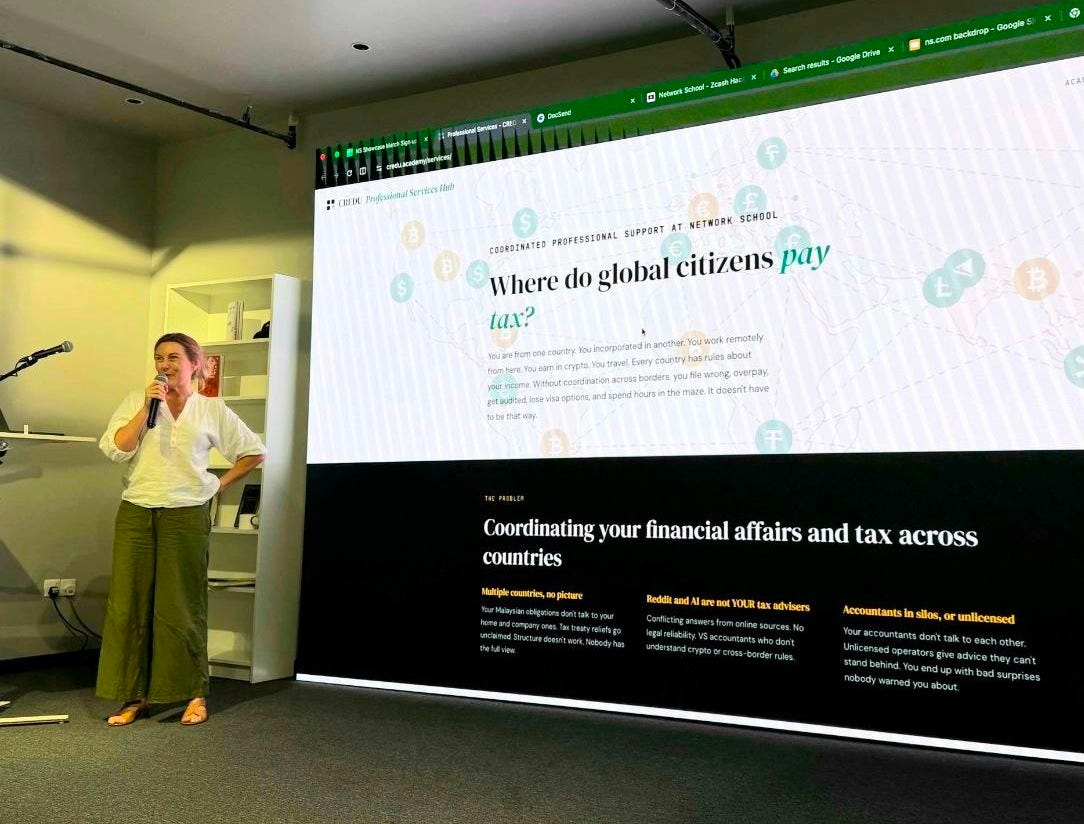
The immediate issue was not the gen-AI tool itself producing unreliable advice. Builders experiment constantly in environments like this and early systems are expected to be rough. When I proposed a safer rules-based approach, the more important observation was how quickly people assumed that tax analysis could be automated once information was collected.
That assumption revealed a structural misunderstanding.
Tax statutes are written as deterministic rules. It’s easy to assume “code is law”. A statute defines conditions and specifies outcomes when those conditions are met. Residency conditions, filing triggers and withholding obligations are all written in this logical form. In principle a machine can apply such rules instantly once the inputs are known.
The difficulty is that professional tax work rarely begins with reliable inputs.
Before any rule can be applied a practitioner must determine which jurisdictions may be relevant, which types of income exist, and what reporting regimes could apply, There’s a skilled discovery process in surfacing what’s relevant and testing what the client knows is relevant, leading to the necessary full disclosures. Globally mobile individuals often combine self-employment income, passive income streams and digital asset movements. They may originate from one country, while residing in another, working for and founding companies other countries, and moving through several others during different jurisdictional tax years that overlap.
Determining which rules matter is itself part of the analysis.
This became clear during a discussion about Malaysian tax residency for foreigners. Malaysia’s territorial tax system relies heavily on day-count tests and where the work is performed. An individual who spends 182 days or more in the country during a calendar year is generally treated as resident for tax. One may also become technically liable for tax on overseas income as a non-resident. Tax treaties may prevent double taxation but it is not clear how to invoke them in some situations.
The statute also allows residency to be established across adjacent years when temporary absences do not prevent it. Administrative guidance provides examples of absences that may be treated as temporary but does not define a precise boundary or clarity on situations that depart from traditional employment and business patterns.
In practice that means determining residency can involve incomplete travel records and ambiguous facts. Someone may live in with longer-term intentions in Malaysia for several months, leave for a period, and return later. Whether that absence qualifies as temporary depends on surrounding circumstances and the interpretation that could be defended if questioned by the tax authority.
The statutory rule itself remains deterministic. The uncertainty arises in determining whether the inputs required for the rule are reliable and whether the interpretation of the rule is sufficiently certain to apply. Interpretation of the tax law against a set of circumstances most likely also requires specialist local practitioner experience with similar client cases previously decided on by the tax authorities - and that knowledge is not made available as public guidance.
This distinction matters for how AI systems are designed.
Large language models operate probabilistically. They produce outputs based on patterns in training data rather than applying formal rules. That makes them useful for certain tasks. They can summarise legislation, identify relevant rulings, surface potential issues and assist practitioners in organising information.
They cannot determine whether ambiguous facts satisfy a legal rule or whether a particular interpretation can be defended before an authority.
Legal systems operate through accountability. Someone must decide that the available information is sufficient and that the interpretation taken is reasonable. Someone must also accept responsibility for that decision.
Tax compliance illustrates this clearly. Returns must be lodged even when information is incomplete or administrative guidance remains unclear. Practitioners must determine whether the available information is sufficient to take a position and whether the interpretation can be defended if challenged. Professional standards require reasonable care and an intention to comply with the law. The practitioner who signs the return accepts responsibility for that judgement.
This responsibility does not disappear simply because AI systems are involved.
A qualified accountant’s tax agent licencing and insurance provides safeguards of responsibility that have not been engineered into AI. Without one signing your tax return, you’re on your own. The law doesn’t recognise machine agency any more than an unlicenced human tax adviser.
The discussions that followed the initial debate gradually converged on a practical architecture for combining deterministic rules, probabilistic analysis and professional judgement.
The first layer involves structured information collection.
Systems can guide users through questionnaires that capture travel history, income sources, entity structures and jurisdictional connections. This reduces the ambiguity that often appears in informal descriptions of personal circumstances.
The second layer involves deterministic rule engines.
Once relevant facts are captured, statutory thresholds, filing triggers and assessable income can be evaluated directly. Residency day counts, filing requirements and treaty conditions fall naturally into this category.
The third layer involves AI-assisted analysis.
Language models can review the collected information and identify missing details, highlight potential issues and surface areas where interpretation may be uncertain. In this role the system acts as an analytical assistant rather than a decision-maker.
The final layer remains professional judgement.
A licensed practitioner reviews the analysis, interprets ambiguous facts and determines whether the rule can be applied with sufficient confidence. That practitioner accepts responsibility for the position taken, putting their insurance and licence at risk should they be unable to defend it on the taxpayer’s behalf.
Each component performs a function suited to its strengths. Deterministic rules handle the logic encoded in legislation. Probabilistic models assist with organising information and identifying uncertainty. Practitioners evaluate the facts and interpret the law.
The discussion that began with a simple AI tax tool therefore exposed a more fundamental design question:
The issue was not whether AI could assist with tax analysis. The issue was where deterministic legal reasoning begins in a domain where facts are often uncertain and legal interpretation can remain ambiguous for years.
Recognising that boundary has implications beyond software design. Communities experimenting with new institutional structures increasingly involve members who operate across multiple jurisdictions. Supporting those members requires systems that combine technical infrastructure with responsible professional oversight.
The most productive role for AI in this environment is not replacing practitioners or merely reducing them to “human-in-the-loop” but reducing the analytical overhead required to reach informed judgement.
This is one of the reasons I am opening CREDU Academy at Network School, a residency for accountants and technologists to collaborate on building these systems and the professional governance around them.
Deterministic legal rules require reliable inputs. Probabilistic systems can help determine whether those inputs are sufficient. Professional judgement determines whether the rule can be applied and whether the resulting position can be defended.