

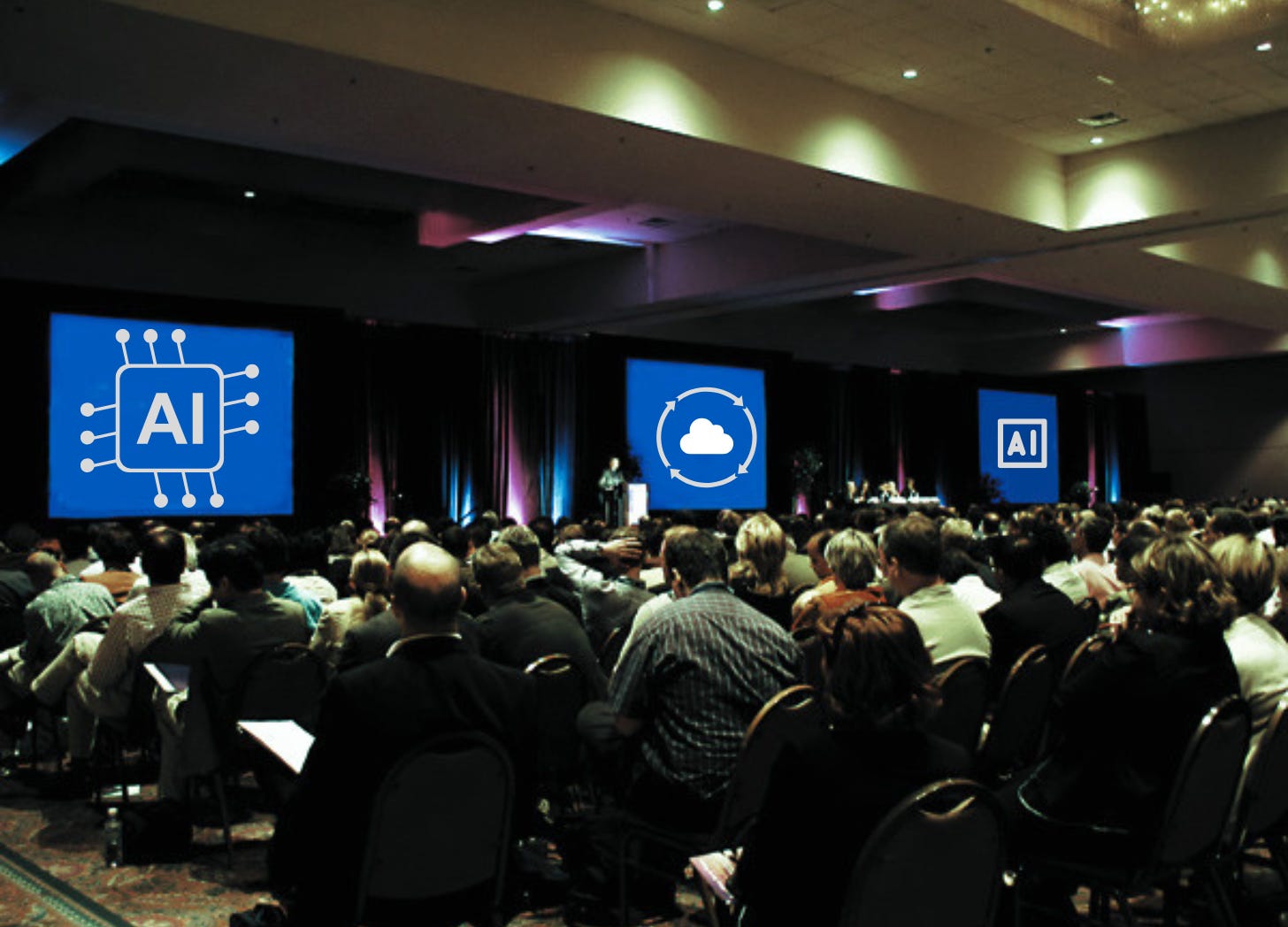
The profession is splitting between practitioners developing enough technical literacy to stay relevant and practitioners who are not. It’s not because they lack the capability, but because it is still being treated as optional.
That is not a comfortable thing to say.
A respected peer recently framed it as “two camps - those who can build and those who can’t - and that’s OK.”
It is not.
The camp that cannot build also cannot properly evaluate the SaaS it stacks, adapt tools to its own workflows, or manage its security and ethical obligations. That is professional vulnerability.
So why are more of us not learning to build our own tooling now that AI has made it so accessible to do so? Because our Continuous Professional Development (CPD) market is not teaching us how.
The structural conflict
There is a version of operational AI adoption in accounting that goes like this: attend a presentation, be reminded not to use free versions, get a list of vendor tools for accountants, subscribe, wait for the next feature release.
Most CPD is just product awareness dressed as professional development. The sponsor’s goal is product adoption with each CPD hour making the practitioner more dependent on vendors, not less. Content that teaches practitioners to build their own alternatives reduces vendor lock-in, and that kind of content does not get sponsored.
The profession has spent 15 years in this pattern. Practice management, accounting ledger add-ons, client portals, document management, cash flow and forecasting, advisory - each wave of “accounting tech” deepened vendor dependency and added subscription fees without developing our underlying literacy. AI is next, and moving faster.
The thought leadership problem
Most accounting tech thought leaders are structurally incentivised to amplify cloud products and ecosystems. The people feted in vendor-sponsored award lists are the ones whose influence drives product adoption and that is their value to the accounting apps ecosystem. Much of this is market development with a friendly personal brand attached, not independent thinking about the future of accounting.
Critical voices do exist. Angela Shi of Empathetic AI and CA ANZ CEO Ainslie van Onselen have both pushed back, arguing that professional judgment and accountability cannot be automated away and that practitioners remain on the hook regardless of technology used. But these voices are influencing high level policy speak, not offering solutions that practitioners are grasping for on Monday morning.
Our industry events are not helping us to understand governance technologies either.
CPD conferences still wall off crypto and blockchain into a standalone category stuck in 2021 speculative-investment framing, while AI gets centre stage. That misses where the technologies now intersect. Cryptographic verification matters to AI governance because it enables identity, authority, auditability and tamper-evident records in systems that will increasingly act with autonomy. AI agents are already transacting in stablecoins and crypto because that is what works for autonomous software moving value without human intermediaries.
These technologies are converging, and our events are curated by people working from an outdated mental model who dismiss frontier expertise because it does not fit the sponsorship deck. I have written about this convergence and what it means for the profession’s public interest mandate.
Who should be getting up on stage
The people who should be leading AI CPD are the practitioners already building.
Trevor Monaghan is delivering hands-on AI training through valuation workflows and argues that your ledger should stay the system of record, not try to become your AI vendor. Christopher Dodson encourages SME accountants to solve their own problems with tools like Claude Code, in practitioner forums. Lance Rubin is teaching financial modelling across CA ANZ and ACCA while warning against AI being layered onto weak foundations. Wei Xiang Chan teaches crypto sub-ledger integration with accounting systems and compliance through Web3 Accountant, and will be amazing with AI. Daryl Aw has built more than a thousand RPA robots for accounting firms and teaches practitioners to build their own automations.
I’ve been with Network School in Malaysia since September 2024 learning from technical builders at the intersection of AI, Bitcoin, blockchain and cryptography because accountants should not be passive users of these systems. We’re obligated to the public interest and work with evidence, control, assurance and consequences, all central to AI. CREDU Academy is a three-month residency where accountants can build working tools, test AI systems and develop technical judgment through collaborating with programmers, and while piloting open, peer-recognised credentialing.
These are the people who should be leading our CPD now. The profession keeps platforming vendor influencers and coaches. We are past that.
What real technical CPD actually looks like
Real technical CPD starts with the landscape: understanding the difference between AI, machine learning, deep learning, generative AI, RAG and AI agents, because most practitioners are being sold “AI features” without knowing what those features actually are, how they work, or where their limits sit.
It means learning how an API works, how to read technical documentation, how to map a workflow, how to build a simple automation and understand what it is doing, and how to test whether an AI tool actually delivers what the vendor claims. It means writing effective prompts, evaluating tools against each other for the same task, and reviewing AI-generated outputs before they go to a client.
It teaches you to develop your own proofs of concept and deploy agents into your practice, and to get far enough to work directly with engineers who can turn your prototypes into production software faster and more cheaply than ever before. An AI agent can send emails, move files, reconcile data, and transact on your behalf without asking permission at each step. If you do not understand how that works, you cannot govern it.
It teaches AI governance from the point of execution, embedding controls into automations and agents as they run rather than auditing them after the fact, because AI does not care about your responsible-AI policies sitting in a PDF and governance that only exists in documentation is not governance.
It only matters what we have actually created to solve a problem with AI, not how many CPD points we racked up listening to people talk about it. That is the CREDU response to traditional CPD: peer-to-peer professional development where practitioners learn from and verify what each other has shipped, tested and deployed.
The gap is compounding
The gap between practitioners who can direct these systems and practitioners who depend on vendors to package them for us is compounding now. Every month it gets wider. When your core ledger and practice management platform is now choosing your AI vendor for you, the dependency has moved somewhere most practitioners are not even looking.
The profession can keep consuming CPD that serves sponsors, or it can start building the technical literacy that serves practitioners.
That choice is being made right now, whether we acknowledge it or not.
My name is Electra Frost and I am the founder of CREDU Academy in residence at Network School, Malaysia/Singapore, where I work on international tax and professional collaboration solutions. If this interests and motivates you, I want to hear from you. electra@electrafrost.com