

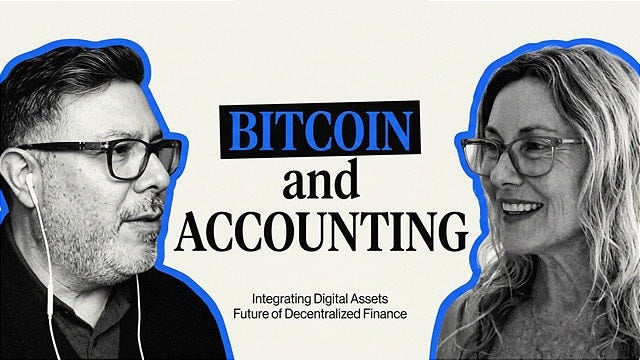
I joined Cezars Torres-Rueda on his podcast The Future Was Yesterday to talk about why I’m at Network School. This write-up is for anyone who likes to read and listen.
Cezar asked what I’m doing at the moment. The short answer is that I’m working out how to merge the accounting profession into a new network on Bitcoin. The rest of this post is the longer answer.
Society as a service
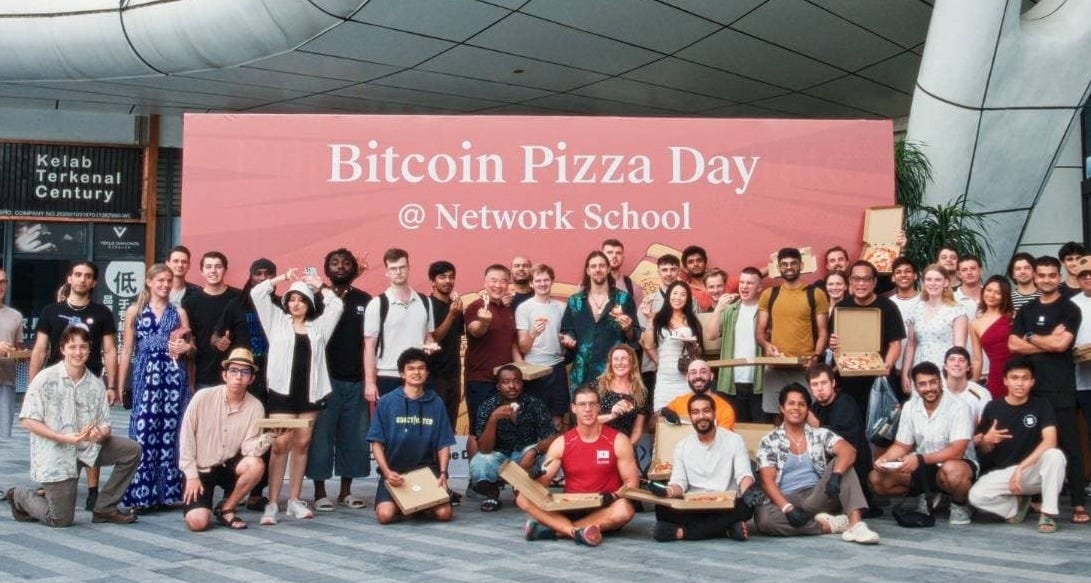
I live at Network School on Forest City, a man-made island off the Johor strait across from Singapore. In 2024 Balaji Srinivasan sent an email to everyone going to the Network State conference saying “with the power of Bitcoin, we have an island, come and start the network state with us.” I was one of the first 128 picked from about four or five thousand applications. I’ve been with NS ever since and my life is here now.
The innovation of this “startup society to bootstrap other startup societies” is what Balaji calls society-as-a-service (SaaS). I pay a reasonable monthly membership fee that grants me continued access to their societal infrastructure - which includes apartment accommodation, coworking, three healthy meals a day, gym training, programming on everything from frontier tech to AI to crypto to health. The proximity to Singapore means people come to me for conferences rather than me having to travel so much. I get more done. I’m surrounded by people from many countries building and teaching, we have fun, and there’s no tall-poppy syndrome.
Why I’m merging the accounting profession with Bitcoin
I’m preparing my communities for post-national economies - where The Bitcoin Standard meets The Network State.
Bitcoin doesn’t need regulation. It’s trustless. If it’s not trustless it needs regulation.
As we build protocols and multi-currency economies that may settle on Bitcoin instead of the US dollar, we could end up with a multifaceted economy with Bitcoin-denominated "stablecoins", altcoins, tokens, derivatives, and all kinds of things, on layered settlement architecture. We will understand that 1 BTC = 1 BTC and everyone can agree that everything is divided by 21 million. Unless the underlying value of an altcoin, token, or any financial derivative is Bitcoin, tracked through some layered settlement architecture, it will be worth zero like fiat.

The further you get from Bitcoin, the more counterparty risk and trust assumptions you need to know about. You have to trust the L2s, protocols, signers, exchanges, custodians, network state node operators, and so on. Those are the points that need some form of reinvented regulation that will be largely on-chain but not entirely. Bitcoin may separate money from the state, but if it’s not Bitcoin then we still need separation of powers from the state.
If your regulators are caught in nation-state jurisdictional coordinates that don’t coordinate well across borders, and the trust is not in those, we need to ask where the trust does sit. I think it sits with accountants, because accountants already have a federated global code of conduct that binds them to act in the public interest, and that obligation works across geographic borders.
The International Federation of Accountants (IFAC) has about 150 member bodies around the world. Members of those bodies must comply with common standards on competency and ethics. One of those is the public interest, which we are required to abide by above the interests of our clients and employers, perhaps even governments (this can be debated). No other profession has this combination of global federation, enforceable public interest obligation, and presence inside every significant economic institution.
The public interest obligation is structurally different from government regulators or international treaties: it cannot be defunded or lobbied away without dismantling the profession’s licence to practice. I want to transport that into a decentralised, AI-driven economy built on Bitcoin.
There’s a related question about taxation pathways for network states, and how we get from the concept of tax residency to network residency, which is another thesis and solution I’m occupied with building at Network School.
Accountants are technologists - they really are
We think of accountants as doing operational things and forget that accountants are technologists. We’ve led most businesses onto the internet and cloud applications. The accountants I know love working in Claude. They’re understaffed, they want to automate, and they’re open to building their own systems rather than being passive users of vendor software.
Money is technology and accountants help us use it properly so we can transact with confidence. Accountants have always built their own accounting technology. They apply the standards they're trained on and trust each other's work. When our money is on public blockchain with AI using it, that's where they have to be building the accounting technology.
If current accountants won’t learn to be technologists, then we need to qualify the technologists as accountants and trust them to be accountable with our money instead. The program for that is coming soon at NS; AI engineers and technical builders I've spoken with here are keen for what that can mean for them.
What society will continue to rely on our profession for is accountability, advocacy and trust. As a public accountant, I’m regularly asked to sign verification documents for a client to obtain an investor certificate, receive a government grant, apply for a loan, because my signature on the financial evidence carries credibility that the borrower’s doesn’t. The same goes for representing clients to government authorities over tax and other issues. If the government has questions, they come to me, not the client. I’m qualified and insured, and I speak their language.
All these excited people saying “I’ve got Claude now, I can replace my accountant” will find out otherwise soon enough. There’s a critical shortage of public accountants in the world so don’t burn those bridges, build them wider with us. AI is not going to help you when the government asks you questions, because you won’t have anyone.
What I’m working on is getting accountants to step into being verifiable on an open protocol. You need an accountant, or at least some kind of proof that an AI acted with the authority of an accountant and is traceable to someone you can trust.
That is what CREDU is. Verifiable credentials for the accountant to aggregate on their own domain and make them discoverable, so AI agents (the public) looking for the right expertise can find it. graph.electrafrost.com is a personal version of this showing some of my last 15-20 years of work. I’m now creating a similar template for accountants to start their own CREDU on GitHub. Here’s how I used AI to build my graph and improved my technical skills in the process.
The Bitcoin Standard
I’d like to see, within the next three to five years, an early unit-of-account implementation of the Bitcoin Standard. Accountants should be on-site and completely involved in that, because they can teach everyone not just how to use Bitcoin, but also how other digital on-chain currencies can be settled on Bitcoin with a methodology for evaluating and reporting on trust minimisation and risk.
Imagine Bitcoin with a future open-source version of SWIFT. Since no government can expand the underlying money supply, every currency in circulation gets denominated in fractions of 21 million, which revalues everything we pay for to its real productivity and usefulness to people.
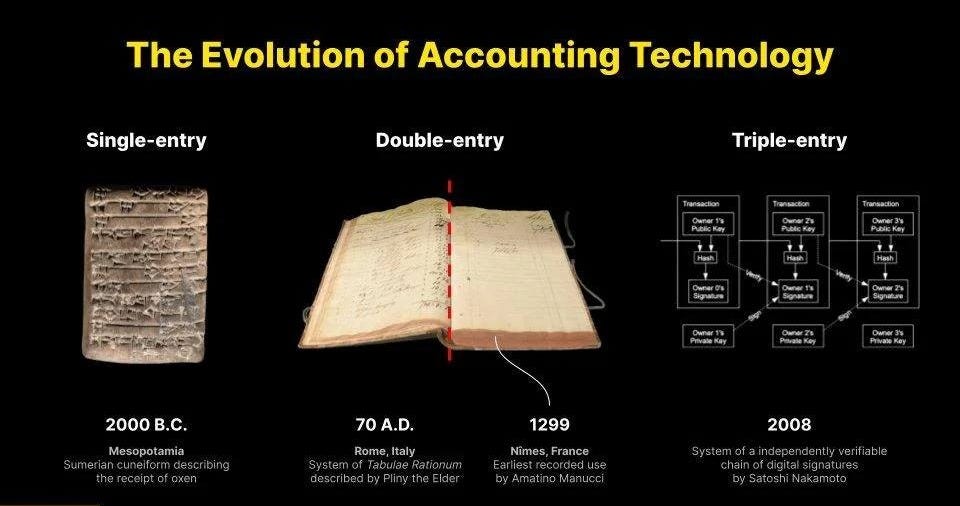
People talk about triple entry bookkeeping with blockchain, where blockchain adds a cryptographic receipt on a shared ledger to traditional debit and credit. Quadruple entry adds a fourth entry. “AI is going to create lots of jobs in verification,” Balaji said at Network School. AI generates claims, crypto verifies them. Where it involves money, accountants validate the proofs across systems and provide assurance.
The accountant becomes responsible for building upstream systemic integrity and execution governance, not for entries on ledgers and historical reporting. The validation or assurance is the legal, regulatory test point, and it’s where decentralised regulation with a network of accountants and their AI agents pairs well with a Bitcoin Standard. (you can search for quadruple entry here)
A web of trust with internet-native money, network states and accountants
I’m one of many who see that Bitcoin is inevitable. It’s the return of hard money when fiat fails. We also need to understand that Bitcoin is money, not merely currency. Fiat thinking has caused us to conflate the two.
Bitcoin's primary monetary function is as a unit-of-account for everything else - the standard against which contracts and prices get measured. It doesn't need to be spent or stored by all of us for all of us to benefit, once it becomes our standard of contract.
AI needs internet-native money, programmable digital tokens and value. We should have had that with the internet from the beginning. That’s what Web 3 was all about except that people were fabricating value instead of being accountable to Bitcoin in web3.
That's why I have explored Stacks sBTC and the Bitcoin L2 ecosystem research, while studying the emerging risk analysis frameworks for them. It’s interesting to see how Bitcoin can be used in different trust-minimised software environments, Bitcoin-adjacent protocols or anchored to Bitcoin, cross-chain and non-custodially in decentralised applications. It's how the internet should have been built in the first place: as a web of trust with internet-native money.
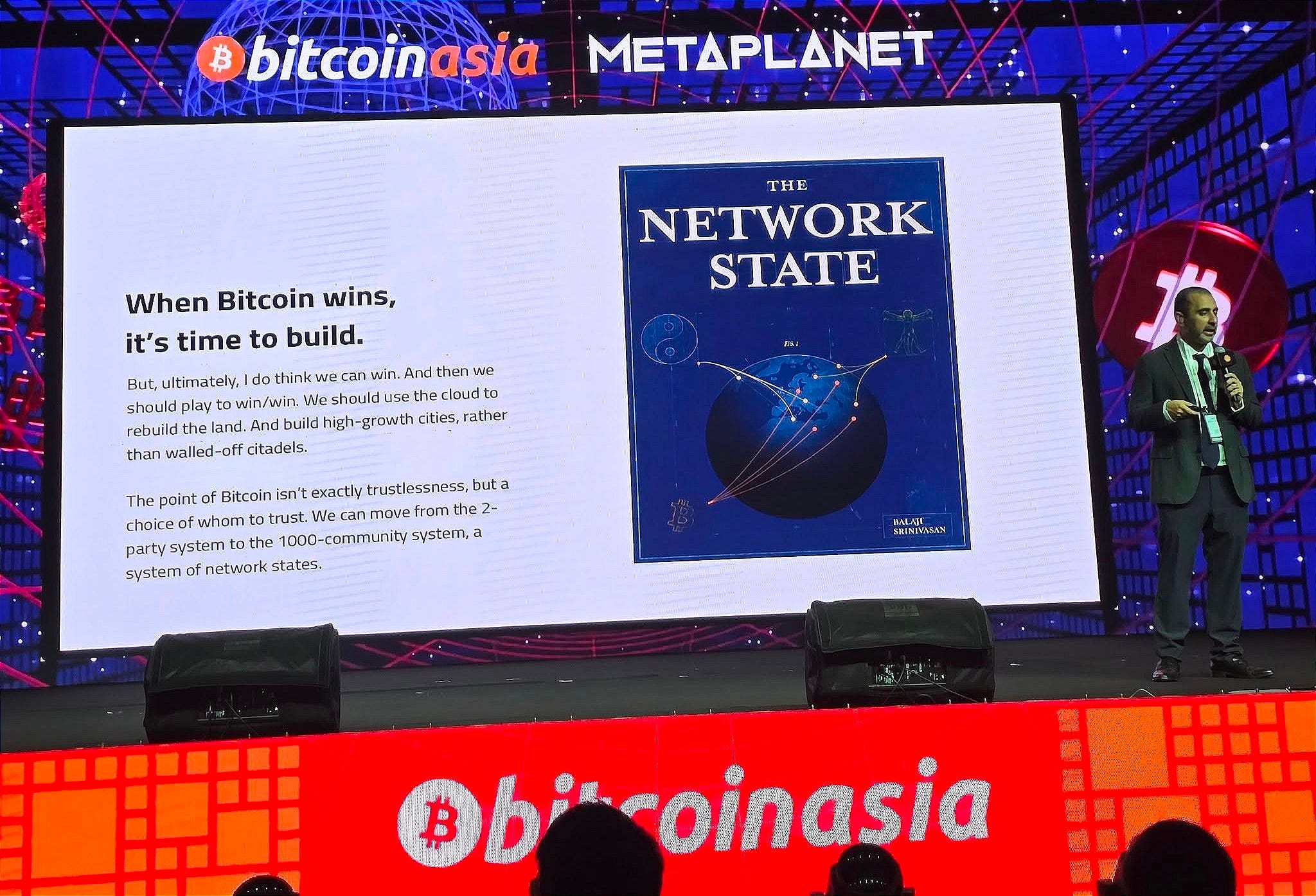
Network states are the human web which is building how we use Bitcoin. And anywhere it's not Bitcoin-native, accountants belong in that web.
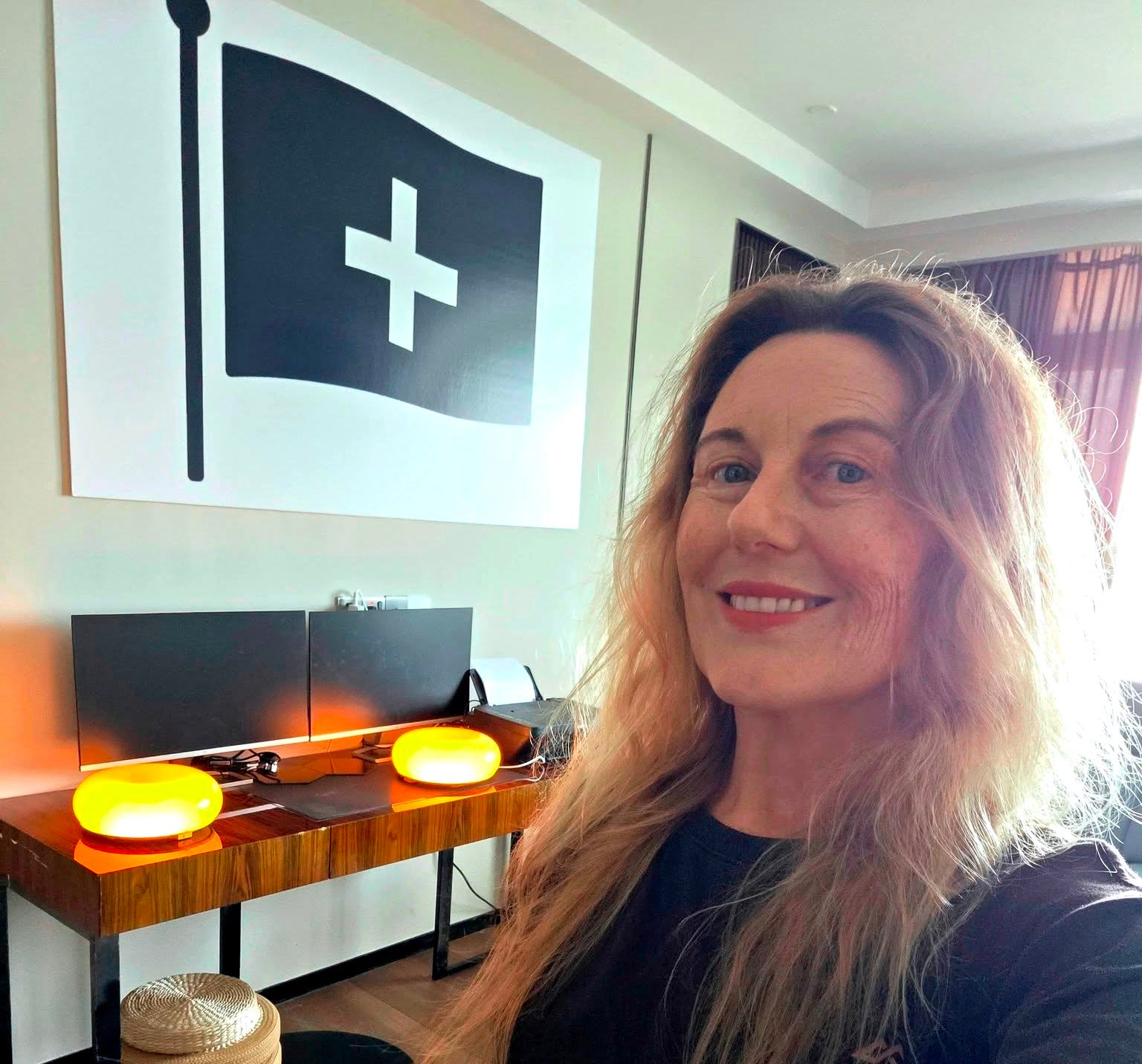
You can find me at electrafrost.com.
I'll be speaking about this with more panache at Bitcoin Asia 2026 in Hong Kong 27-28 August, and publishing more.
If you've read this far and would like to come to Network School, you're welcome to use my valuable invitation provided that you message me to let me know!